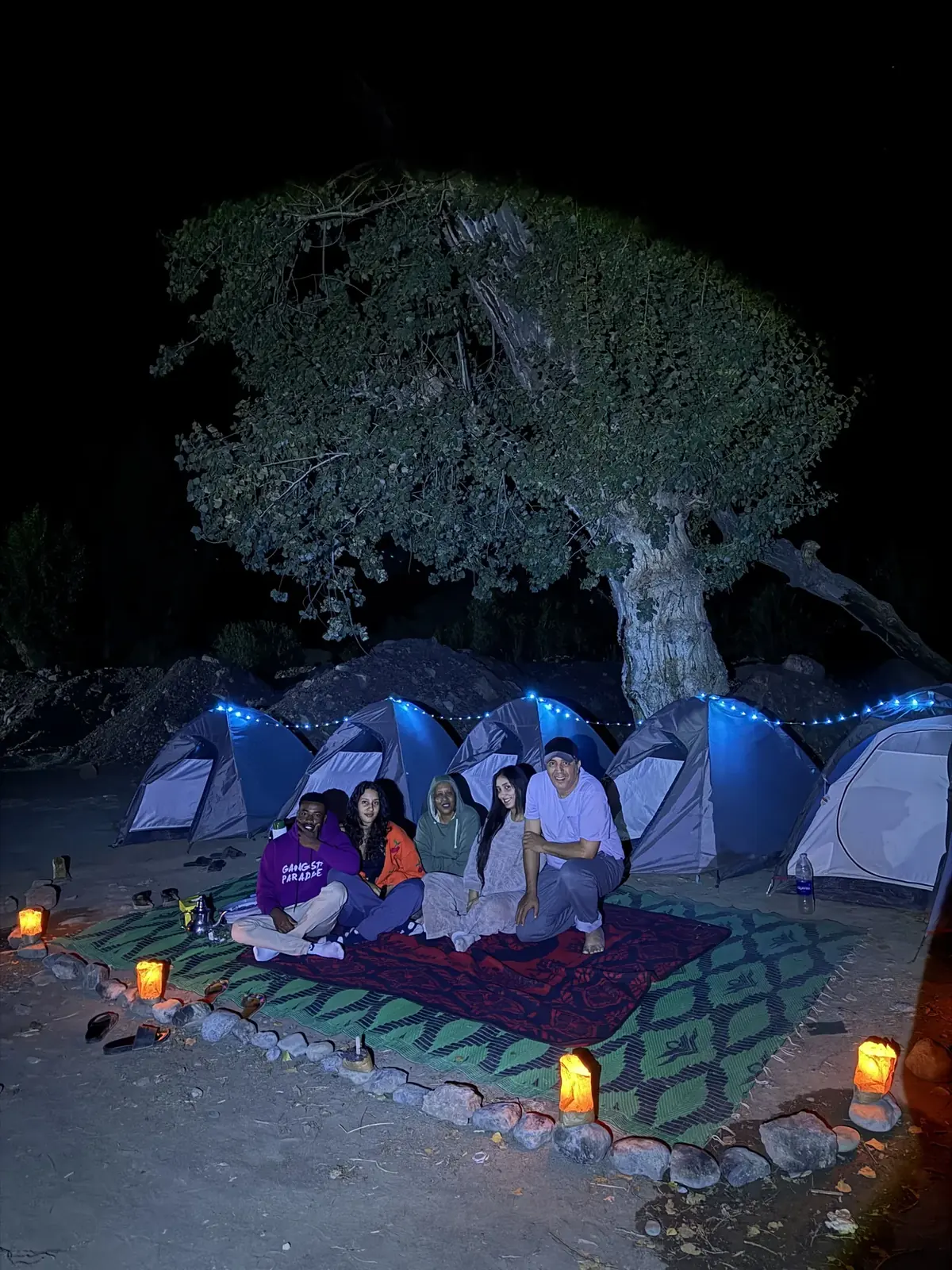
Wild camping near Imsfrane can be a memorable night in the High Atlas, but the best campsite is not simply the place with the best photograph. Permissions, river safety, weather, drinking water and respect for local life come first.
What wild camping actually means
A tent outside a formal campsite is not automatically permitted everywhere. Land may be privately owned, used by shepherds or subject to local or environmental restrictions. Ask about ownership and obtain the necessary agreement before pitching a tent.
The Ahansal valley, wooded areas and open mountain landscapes offer beautiful views. Yet choosing a camp also requires attention to the ground, wind, access tracks and the daily movements of people and animals.
Picking a safe location
Never camp in a dry riverbed, flood channel or directly beneath unstable cliffs. Heavy rain upstream can cause a dangerous rise in river level even when the sky over the tent is clear. Keep a prudent distance from the water and consult someone who knows the site.
Choose robust, fairly level ground rather than fragile vegetation. Avoid blocking paths, livestock routes or access to water. Think about how you would leave safely if the wind or weather changed overnight.
What to pack for the night
Mountain temperatures can fall after a warm afternoon. Bring a suitable tent, sleeping bag, insulating mat, warm layer, waterproof protection, torch or headlamp and a simple first-aid kit. Comfortable footwear makes moving around the camp safer.
Do not assume drinking water is available. Carry enough for the group and an extra margin. A small cooking system can help where it is permitted, but always check fire restrictions and avoid equipment that could ignite surrounding vegetation.
Food, waste and sanitation
Choose simple meals with minimal packaging. Keep food protected from animals and carry all waste out, including fruit peels and tissues. Biodegradable does not mean harmless or immediately invisible.
Use available toilets where possible. Otherwise ask about locally appropriate sanitation practices away from watercourses and frequently used paths. Do not wash dishes with detergent directly in the river.
Campfires are not essential
Open fires can start wildfires, scar the ground and disturb habitats. Dry conditions and wind increase the danger. Never assume fires are allowed; where restrictions apply, or the risk is significant, do without.
A good mountain evening can be about a meal, conversation, stars and silence. Enjoying the surroundings without damaging them is part of the experience.
Respecting local communities
The mountains are used by families, shepherds and livestock. Paths, fields and water sources have purposes that visitors may not immediately recognise. Ask permission before entering land or photographing people.
A local host or guide can explain suitable camping places, help with transport and equipment, and make sure tourism benefits the communities that live in the region.
Building a realistic overnight programme
Combine one camping night with a day walk or a visit to the Ahansal gorges. Arrive early enough to pitch the tent safely, prepare food and settle before darkness. Leave time in the morning to pack and inspect the site carefully.
Before booking, clarify tent capacity, meals, drinking water, transport, guiding and what equipment is included. Thoughtful planning creates a better memory than an overcomplicated camp.